Survivor stories
Fiona’s story
Referral pathway: police
*Names have been altered to protect the identity of the survivor.
Fiona’s* ex-husband, Roger*, was referred to Make a Change after he assaulted his partner last year. The local Make a Change service, run by a frontline domestic abuse organisation, called Fiona to offer support.[1]
Fiona told them that during the five years they had been married, she had endured ongoing controlling and coercive behaviour. She also told them about another relationship in the past, where she had experienced physical abuse.
Life before Make a Change
Fiona spoke about the impact of the controlling and coercive behaviour on her day-to-day life, which included verbal, financial and emotional abuse: “I would spend hours and hours at work, so I didn’t have to be in the house with him.”
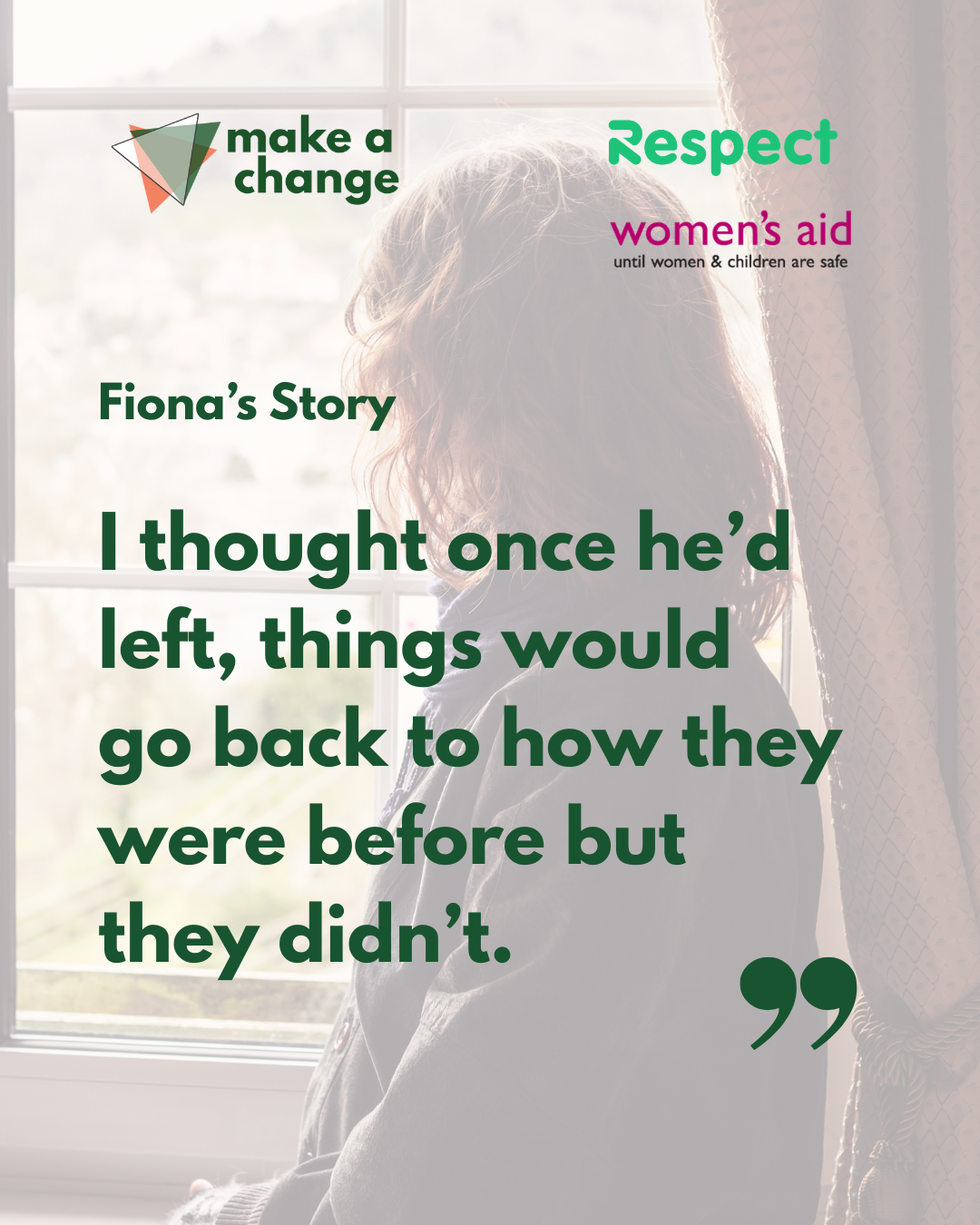
She said, “I thought that once he’d left things would go back to how they were before, but they didn’t.”
A year and a half after separation, Fiona was struggling with the impact of the abuse on her mental health: “I went from a loud and vivacious person to someone who’d had the life sucked out of them.”
Fiona’s colleagues noticed changes in her, including behaviour that raised concerns about her mental health. Following their encouragement, Fiona spoke to her GP and was referred for counselling.
Support received through Make a Change
When Fiona’s ex-husband started the Make a Change programme, the support service would call Fiona once a week to see how she was and to update her on her ex-husband’s progress on the behaviour change course.
They asked her if she wanted to do group counselling, but she declined, saying: “I didn’t see myself as a victim.” She said this changed when she met with the support worker, and they told her that what he’d done to her was "just as important to be listened to and acknowledged as someone who had experienced physical abuse".
Alongside the separate counselling Fiona accessed for her mental health, the support she received through Make a Change’s specialist delivery partner allowed her to understand what she had been through and helped to validate her experiences and feelings.
For Fiona, having a safe and confidential space to talk about what she’d been through was invaluable:
“There are some things you don’t want to talk to your family about because it upsets them. It’s hard to let your family and friends know exactly how you feel; how it really made you feel.”
Life after Make a Change
After a while, Fiona said she felt much better and decided she no longer wanted to hear updates on her ex-husband’s progress on the programme. The team reassured her that they were there if she ever needed support again.
Fiona is back at work now, after receiving specialist support from a domestic abuse service running the Make a Change programme: “I have lots of friends and an amazing family. Everyone knows what I’ve been through and they’re very supportive.”
When asked what she would say to other survivors, Fiona shared:
“There is nothing to be embarrassed about. You fall into a pattern, and this is what you think is acceptable, but it’s not acceptable. We need to say no to abusive behaviour.”
This is why dedicated partner support is a vital component of work with people causing harm. Through this, Make a Change makes sure that survivors have access to specialist support and do not have to navigate their experiences alone.
[1] To make sure that perpetrator interventions are delivered safely, domestic abuse services can contact both current and former partners where there is an ongoing connection to the individual or where information from them may be relevant to assessing and managing risk. This also provides an opportunity to ensure that all affected partners, including ex-partners, are aware of and can access support.